
Walk into any guitar shop, and you’ll quickly notice how many players gravitate towards the acoustic section. There’s a good reason for that. Acoustic guitars are easy to pick up, simple to use and sound great without needing extra equipment. You can sit down at home, practise a few chords, write a song or take your guitar to a friend’s place without carrying around an amp and cables.
For many musicians, everything starts with an acoustic piece. It helps you learn the basics, from building finger strength to getting comfortable with chords and rhythm. For more experienced players, it becomes a reliable song writing tool, a performance instrument or simply the guitar they reach for when they want to play.
Understanding the Most Common Body Shapes
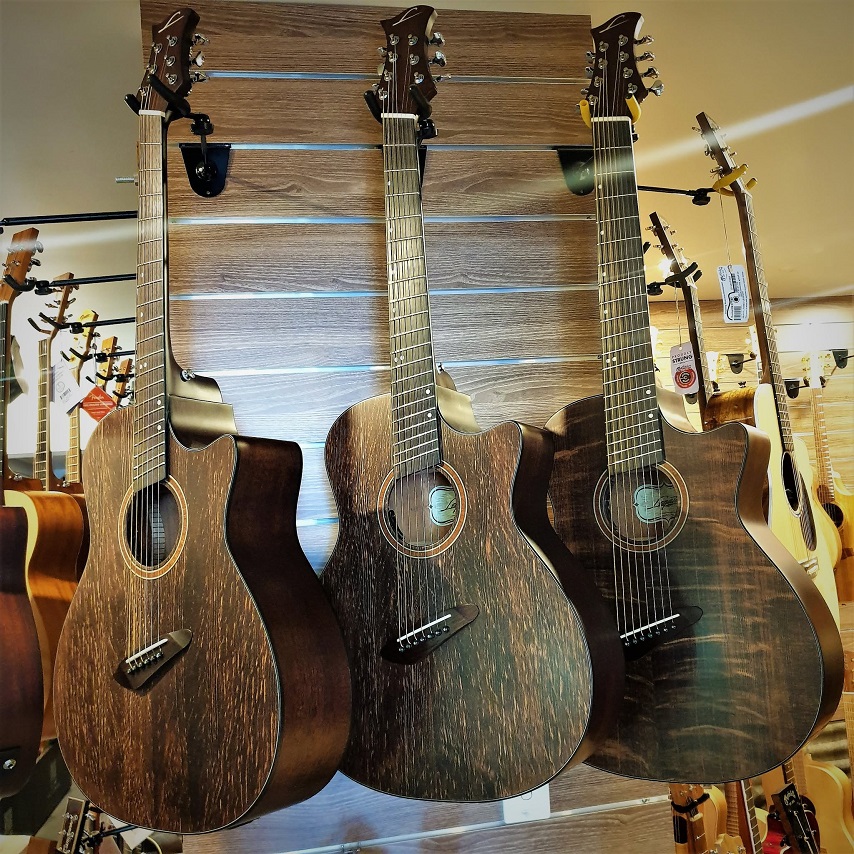
The shape of an acoustic guitar affects the way it feels and sounds. A larger body usually gives you more volume and deeper bass, while a smaller body often feels more comfortable and produces a more focused tone.
Dreadnought
The dreadnought is a classic acoustic guitar design and one you’ll see everywhere. It has a large body, strong projection and plenty of low-end punch.
This shape works particularly well for players who enjoy strumming chords, playing country, folk or rock songs, or accompanying their vocals. It has enough power to fill a room and a familiar feel that suits different playing styles.
Concert
Concert guitars have a smaller body compared with a dreadnought, making them comfortable to hold and easy to control.
They produce a balanced sound with clear mids and highs, which makes them a popular option for fingerpicking and lighter playing styles. If you prefer a guitar that doesn’t feel bulky, a concert shape is worth considering.
Grand Auditorium
Grand auditorium guitars sit somewhere between a concert and a dreadnought. They give you a comfortable size without sacrificing volume.
This makes them a great option for players who switch between strumming and fingerstyle. You get enough projection for performances while still keeping a balanced, detailed sound.
Jumbo
Jumbo guitars are built for players who want a big acoustic sound. Their larger bodies create strong bass response and impressive volume.
They’re often chosen by performers who need their guitar to stand out, especially when playing without much amplification.
Parlour
Parlour guitars have a smaller, traditional design with a distinctive character. They’re comfortable to play while sitting and often have a warm, focused sound.
Many blues and folk players enjoy parlour guitars because they bring out the detail in individual notes and fingerpicked melodies.
What Makes Acoustic Guitars Different From Electric Guitars?
The main difference between acoustic and electric guitars is how they produce sound.
An acoustic uses its hollow wooden body to project the sound of the strings. When you strum a chord, the vibrations travel through the guitar’s top and body, creating the natural tone you hear.
Electric guitars work through pickups that capture the movement of the strings and send the signal to an amplifier. This gives players access to effects, distortion and a much wider range of sounds, which is why they’re common in rock, metal and many modern styles.
The playing experience is different, too. Acoustic guitars usually have thicker strings and a larger body, giving you a more traditional feel and a stronger connection with your playing. Electric guitars often feel lighter and require less pressure from your fretting hand, which can suit players who enjoy faster techniques.
How Tonewoods Influence Sound and Playability
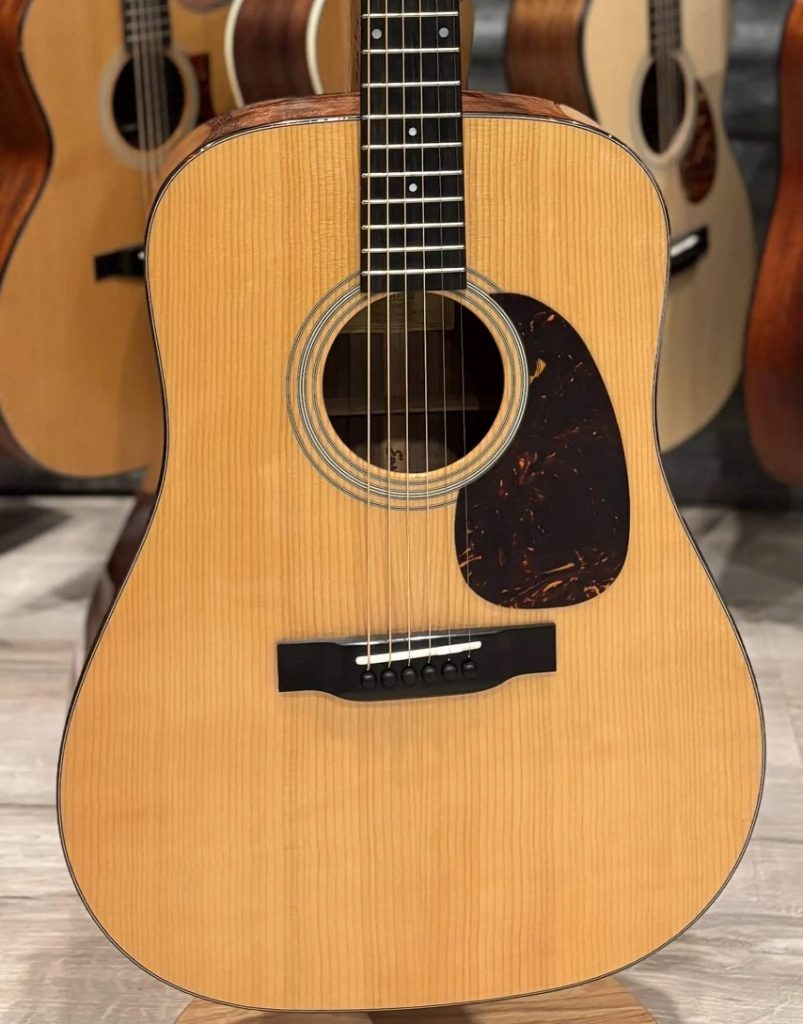
The type of wood used in a guitar affects its tone. It influences whether the instrument sounds bright and crisp, warm and mellow, or somewhere in between.
The top of the guitar usually has the biggest impact on the sound because it’s responsible for much of the vibration and projection.
Spruce
Spruce is one of the most common choices for tops. It offers a clear, versatile sound that responds well to different playing styles.
It works just as well for gentle fingerpicking as it does for stronger strumming, which is why you’ll find it on everything from beginner models to professional instruments.
Mahogany
Mahogany has a warmer, smoother sound with a strong midrange. It’s a popular choice for players who want their guitar to blend naturally with vocals.
Singer-songwriters and blues players often appreciate the rich character mahogany brings to an instrument.
Cedar
Cedar has a softer, warmer tone and responds well to a lighter touch. It’s especially popular among fingerstyle players who want a guitar that feels expressive without needing heavy playing.
Rosewood
Rosewood is known for its depth and tonal complexity. It produces strong bass, clear highs and a full sound that works across a wide range of music.
Maple
Maple offers a brighter, cleaner tone with excellent note separation. It’s a good choice for players who like a crisp sound where individual notes stand out clearly.
While tonewood matters, it’s only one part of the equation. The guitar’s construction, strings and your own playing style all shape the final sound.
Choosing an Acoustic Guitar Based on Your Skill Level and Musical Style
The best guitar is the one that feels comfortable enough to keep playing.
If you’re starting out, focus on finding an instrument that feels easy to handle. A comfortable neck, smooth frets and good tuning stability will make practising much more enjoyable. A guitar that fights against you can quickly become frustrating, especially when you’re still learning new chords and techniques.
As you improve, you’ll start to notice what you like about different instruments. Maybe you prefer the deep sound of a dreadnought, the balanced response of a grand auditorium or the comfort of a smaller-bodied guitar.
Your favourite music can also help guide your choice. Players who enjoy strong rhythm work often prefer larger guitars with more projection. Those who enjoy fingerstyle or detailed melodies usually look for instruments that offer clarity and responsiveness.
If you can, spend some time playing different models before buying. A guitar might have all the features you’re looking for, but the way it feels when you hold it is what really matters.