
Keeping your knives in good condition is a must if you want them to last. If you are an avid cook at home who enjoys making delicious homemade meals every weekend or just a person using a knife for basic cutting purposes, knives are the most indispensable tools used in the kitchen. It would be quite possible for a well-crafted knife to serve its owner for many years if only it were properly maintained. Nevertheless, owners purchase good cutting tools but do not take proper care of them.
Why is Sharpening Important?
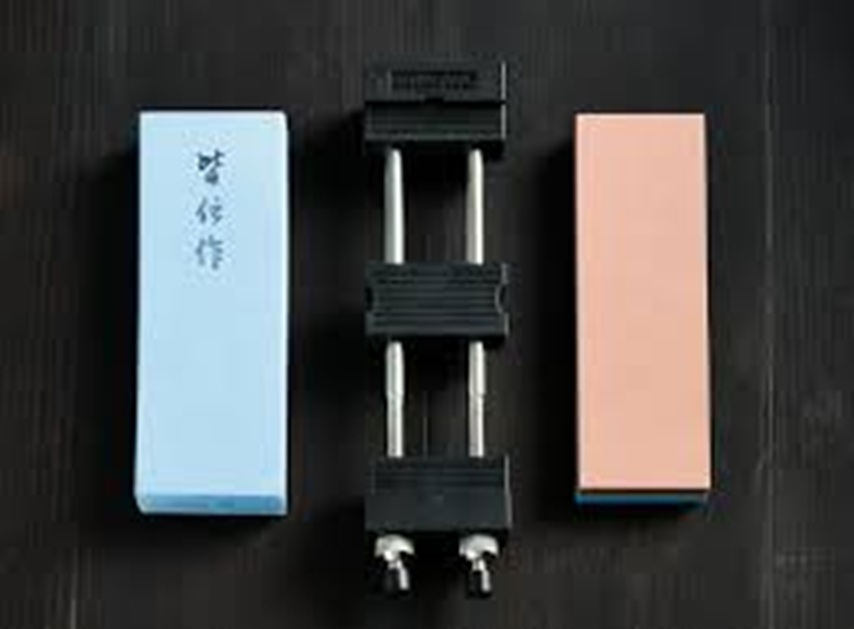
Most people think that having a razor-sharp knife is very dangerous in the kitchen, which is not necessarily the case. On the contrary, a blunt knife is more dangerous, as it forces you to use a lot of downward pressure just to make it pierce through a carrot or a potato. The reason is that when you put a lot of pressure on a blunt knife, the metallic part slides off the slick surfaces of the food and ends up cutting your fingers.
On the other hand, when a blade is sharp enough, it will slice through a vegetable or fruit easily without exerting much pressure. This makes the chances of the blade slipping on your fingers minimal, which keeps you from getting injured during your kitchen activities. Sharp knives will always ensure that you get the best cuts without crushing any ingredients. Using a blunt knife while trying to slice through vegetables such as tomatoes makes them release juice all over your countertop.
Stones
When it comes to putting a razor-sharp edge on your knives, there is simply nothing like a high-quality traditional knife sharpening stone to do the job. As far as low-quality sharpening tools, which take away pieces of the metal from the blade, generic shapes and preprogramed patterns while working with abrasive electric discs are concerned, using stones allows you complete manual control over the entire procedure of sharpening, meaning you can customise the angles according to the steel used. Consequently, the blade gets an incredibly sharp edge.
Using stones manually requires a great deal of flexibility, as only one dual-grit stone allows you to restore even the most severely damaged and chipped blade and bring its surface back to a perfect appearance. Also, the amount of pressure applied and the speed of blade movements during sharpening are completely determined by yourself, you are unlikely to overheat the blade, while using mechanical tools will lead to overheating and weakening of the blade.
To ensure that your sharpening block continues to provide top performance for decades to come, understanding how to properly maintain your stone is entirely essential. Every time you perform a maintenance routine, it is imperative to thoroughly wash the stone with hot water to remove any excess slurry that may be comprised of loose grit and metal filings. Otherwise, such material left behind can be blocked in the pores, and the stone will be completely unusable for further sharpening. Once cleaned, your water stones should be allowed to air dry before being stored in a drawer away from light.
With continued use over time, there will come a point when the interior of the stone will be worn out faster than the exterior surface of the stone, leaving you with an uneven surface that is sunken. You will need to flatten the block of stone on a special diamond lapping plate or coarse sandpaper mounted on a glass surface.
Benefits
The first advantage you will experience when you begin working with your new knife, right after sharpening, will be evident as soon as you start preparing your meal for the night. Operations that used to require effort from your part, like peeling, cutting, or dicing a huge number of onions, or slicing thin pieces of raw beef, can now be done with no effort at all. The knife effortlessly slides through even the toughest vegetables and meats like butter, thus making your preparation faster.
Sharp blades also affect the flavours and colours in your food. They slice foods without breaking the cell walls. As a result, all of the juice remains in place, preventing your meat and vegetables from drying out when you cook or from going mushy in salads.
How to Sharpen
Sharpening with a knife-sharpening stone is not difficult at all, but requires some patience and practice. For instance, for a classic wet stone, soak it fully in a dish of water for ten to fifteen minutes all the air bubbles come off. Lay your saturated stone on the moistened rag or non-slip rubber support placed on your countertop to secure it firmly.
Hold the tool properly by placing your thumb along the back part of the blade, and use your fingers to feel the flat side of the knife for a correct cutting angle of about fifteen to twenty degrees for most kitchen knives. The only true secret is keeping that angle consistent throughout the process. Keep your wrists still, gently press the blade onto the stone, apply pressure from your thumb and move it smoothly from the heel to the end of the blade.