
The Dragon Ball series has a global following spanning a multigenerational fanbase and has become one of the most influential anime and manga franchises. Catapulting Japanese animation into mainstream Western culture, the franchise has achieved a massive commercial presence, encompassing a variety of media from anime and manga to video games and trading card games.
Created as a manga series in 1984 by Akira Toriyama, the franchise begins with the adventures of its main protagonist, Saiyan warrior Goku and his friend Bulma, on their quest to find all seven of the magical Dragon Balls and summon the dragon Shenron, who can grant any wish. The series evolves into the subsequent Dragon Ball Z sequel, depicting the adult life of Goku and his son Gohan as they battle alien invaders and powerful forces vying to control the Earth.
Packed with high-stakes action, dramatic fight scenes, compelling stories, and universal themes, including friendship, heroism and perseverance, the series has a lasting cultural impact, now spanning five decades. Sequels, including Dragon Ball GT, Dragon Ball Super and Dragon Ball Daima (released only last year), have cemented the franchise’s global outreach with fans in over 80 countries.
The Popularity of the Dragon Ball Super Trading Card Game
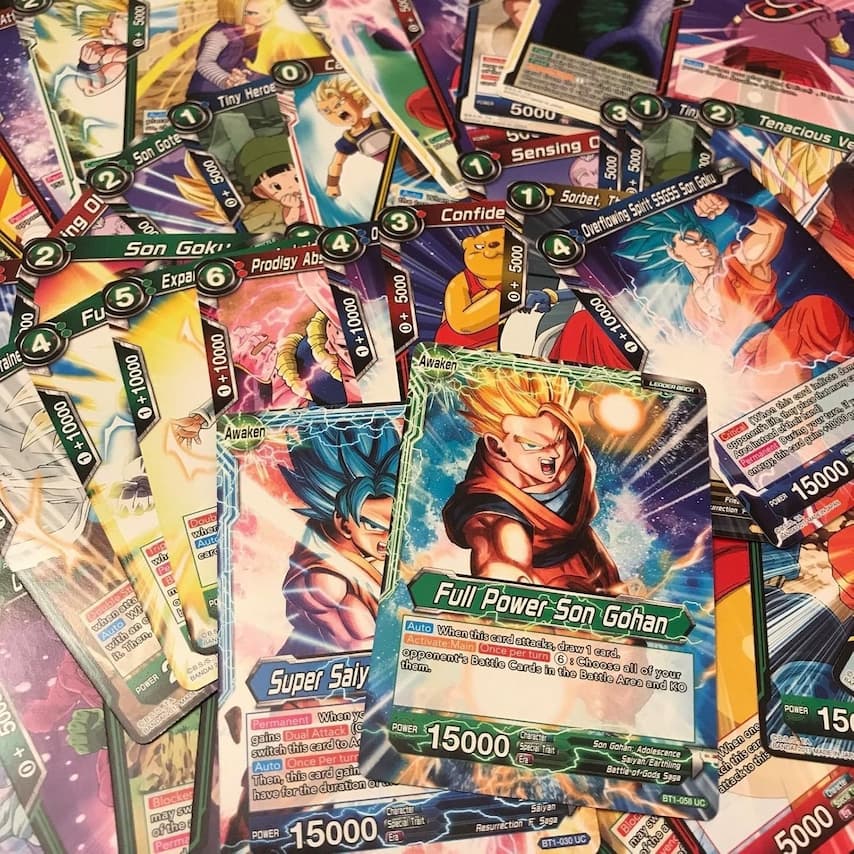
Collectible trading card games are an extension of many manga titles, with DBZ Super TCG topping the list for fan appeal. This is a two-player card game with characters from the entire Dragon Ball franchise. Building on the global popularity of the series, the game allows fans to reenact memorable battles, tangibly explore storylines with varied events and characters, or relive the childhood nostalgia of early editions.
Praised for the high quality of the artwork, the strategic gameplay, and with rare cards, high collectability, Dragon Ball Super TCG remains one of the most appealing trading card games, both for its connection to the franchise and tactical gameplay that captures the essence of the series through its characters, abilities and card combos.
Key Concepts and Gameplay
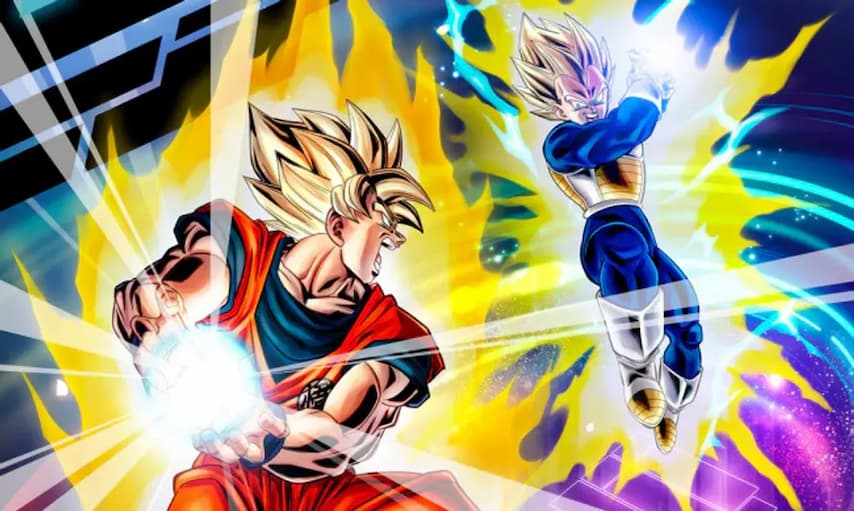
Dragon Ball Super TCG immerses players into the franchise’s addictive storylines and high-paced action, while letting them take control of the main characters. The goal of the game is to reduce your opponent’s Leader Card’s life points from eight to zero. The game involves decks of 50 to 60 cards, a Leader Card and Battle, Unison and Extra cards, each with its own abilities that impact gameplay and strategy. The first player to deal enough damage to their opponent’s Leader Card wins.
Card Types
- Leader Cards: Each player has a Leader Card, usually a prominent character from the Dragon Ball series. This is your main fighter, assigned a specific power level. A key game concept is that leaders can transform and become more powerful.
- Battle Cards: These feature characters from the series. They’re used to attack the opponent’s Leader and defend your own. They, too, have a power level and can have their strength boosted during a combo step. Players can play battle cards during the main phase by placing them in the battle area and fighting alongside the leader.
- Extra Cards: These are single-use cards, but cannot be used in battle. They’re similar to trainer cards in Pokémon, often to boost the Leader or Battle Cards, draw more cards and affect the outcome of battles.
Deck Construction
Starting the game involves building your deck. Players choose a Leader Card, then make a deck of a minimum of 50 (and a maximum of 60) cards. Decks can only include Battle and Extra (or Unison) cards that match the colour (red, blue, green, yellow or black) of the Leader Card. This means limiting decks with cards in one or two colours. You can use up to four copies of the same card.
Areas
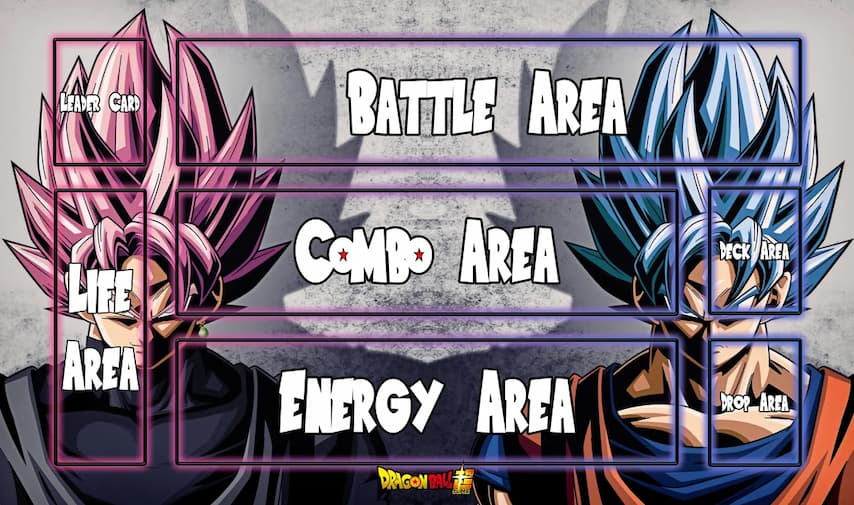
Like all trading card games, DBZ Super TCG has zones or areas for placing cards. These are the Deck Area, where you place your deck (except the Leader Card); Drop Area, where cards go after they’re used; Leader Area for the Leader Card; Battle Area for Battle Cards; Combo Area to boost the power of Battle Cards; Energy Area to pay the cost of other cards and the Life area where players place the top eight card of their deck face down.
How the Game is Played
Playing Dragon Ball Super TCG is done in turns between the two players. The game begins by placing the Leader Card in the Leader Area and shuffling the deck. Each player draws 6 cards, with the chance to mulligan (or exchange one or all cards once). Chosen cards are then placed from the top of the deck face down in the Life Area. Players then decide who goes first.
Phases determine stages in the game. In the initial Charge Phase, players switch cards from Rest Mode to Active mode, then draw a card from the deck. Any cards in the hand can also be placed in the charge zone to pay for the cost of other cards later in the game. The Main Phase is where the game lights up. Here, players can do multiple things – play Battle Cards, activate the skills of specific cards, or use the Leader Card’s Awaken ability, or flip the card for a potential power boost or higher skill. Battles involve an offensive attack step, a defensive step of the opponent and assessing the damage taken in the damage step. The card with the higher power (after all options, such as combos and Battle Cards, are played) wins. In the End Phase, players can declare they’ve played all their moves, allowing the opponent to respond.