
The Green Kings of Your Bag
Among all the clubs a golfer carries, the putter is often underestimated. Yet putting accounts for nearly 40% of strokes in a typical round. A well-chosen putter can transform those frustrating three-putts into confident one-putts, making it arguably the most influential club in your bag.
Unlike drivers or irons, which focus on distance, putters are about precision, control, and consistency. Which is why understanding what makes them unique is essential for anyone serious about improving their game.
Understanding How Your Putter Works
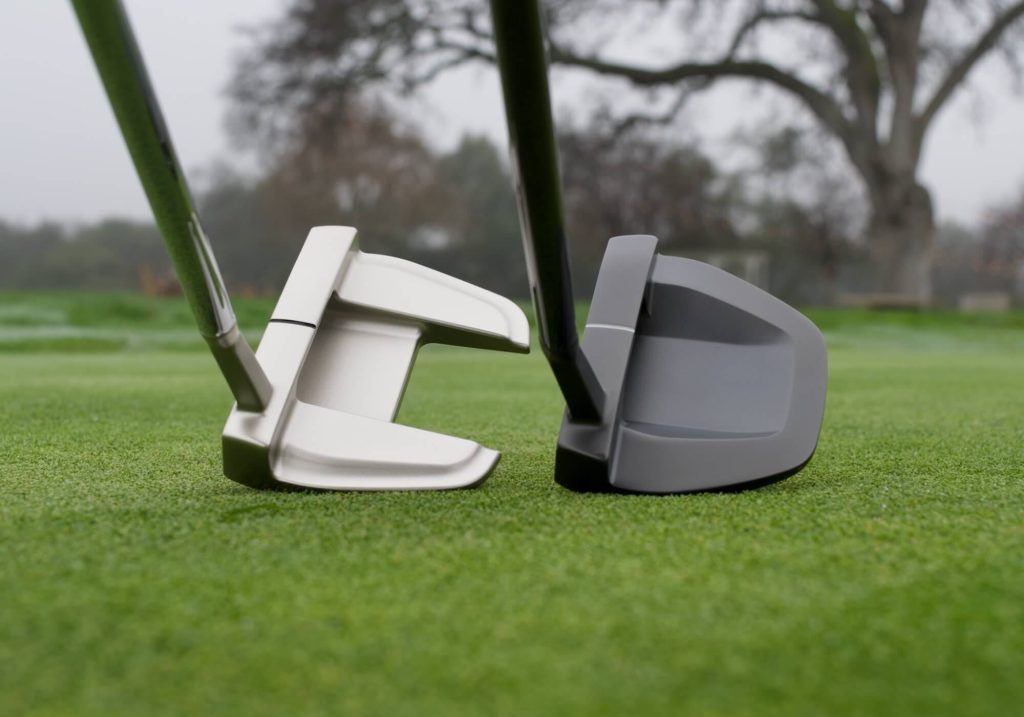
Golf putters are designed for short, controlled strokes on the green. Their primary role is to promote a smooth roll, reduce skid, and enhance accuracy. Different head shapes and alignment aids help players aim more effectively, while face inserts and milling patterns influence feel and feedback.
Choosing wisely means finding a balance between forgiveness and precision. Top-performing golf putters are more than just tools; they build confidence and shape how you approach every crucial shot.
Shape, Weight, Grip
The two most common putter styles are blades and mallets. Blade putters, with their slim profile, suit players who prefer a traditional look and an arc-style stroke. Mallets, on the other hand, offer larger heads with higher moment of inertia (MOI), making them more forgiving on off-centre hits. Modern designs often combine elements of both, incorporating advanced alignment aids and perimeter weighting.
Materials also play a role: steel remains popular, but aluminium, titanium, and even tungsten are now used to optimise balance. Grips vary from slim to oversized, influencing hand stability and stroke control.
Matching Style to Skill
Beginners often benefit from mallet designs, which provide stability and help correct mishits. Experienced players may prefer blades for the feedback they deliver, allowing subtle adjustments during play. Toe hang, shaft length, and lie angle are also critical factors. A golf putter with the right specifications ensures proper alignment and reduces strain during repetitive strokes.
Comfort is non-negotiable: if a putter feels awkward, it will undermine confidence no matter how advanced its design. Testing different options is the most reliable way to discover what complements your natural stroke.
Exploring Options and Smart Buying Tips
The variety of putters available today means there is something for every playing style. High-MOI mallets are ideal for golfers seeking maximum forgiveness, while compact blades appeal to those who value precision. Some designs incorporate face technology that enhances roll consistency, while others focus on alignment aids to simplify aiming.
Innovations such as zero-torque putters reduce twisting during the stroke, improving stability and control. Custom-fitted designs are also gaining popularity, using motion analysis to tailor weight distribution and alignment to individual mechanics.
When choosing, consider durability and maintenance. Stainless steel and milled faces tend to last longer, while softer inserts may wear faster but provide an enhanced feel. Balance performance with budget: a more expensive putter doesn’t guarantee better results if it doesn’t suit your stroke.
Practical tips include:
- Test putters on practice greens,
- Check grip comfort
- Ensure the shaft length matches your posture. Durability, ease of upkeep, and adaptability to your skill level should guide the final decision.
Alignment Aids and Visual Confidence
One of the most overlooked aspects of putter design is alignment. Modern golf putters often feature bold sight lines, contrasting colours, or multi-material constructions that make aiming more intuitive. These visual cues help golfers square the face at impact, reducing the chance of mishits.
Some designs use parallel lines to guide the stroke path, while others employ dots or shapes that naturally draw the eye to the centre of the ball. Research shows that clear alignment aids can improve accuracy by reinforcing consistent setup and stroke mechanics.
For players who struggle with confidence, these features provide reassurance and allow them to focus more on pace and distance control rather than worrying about aim. Combined with the right weight and grip, alignment technology turns a putter into a tool that not only performs but also inspires trust.
Caring for Your Putter

A putter’s performance depends not only on design but also on how well it is maintained.
- Regularly clean with mild soap and a soft brush to keep the face free of debris, ensuring consistent ball roll.
- Dry thoroughly to prevent rust, especially on steel models.
- Clean grips weekly to maintain tackiness and prevent slippage.
- Properly store, ideally in a dry environment with headcovers, to protect against scratches and moisture damage.
These small habits extend the life of the club and preserve its feel over time.
Confidence in Every Stroke
Selecting the right putter is not about chasing trends but about finding a club that feels like an extension of your hands. The right choice improves alignment, distance control, and overall confidence. Golfers who invest time in understanding their stroke and matching it to the right design often see immediate improvements in scoring.
Whether you lean towards a forgiving mallet or a precise blade, the key is to choose a putter that supports your natural rhythm. With thoughtful selection and proper care, every stroke becomes less about doubt and more about certainty.