
With affordable printers, flexible settings, and plenty of material options available, filament-based printing has become a practical choice for everything from simple prototypes to demanding functional parts. PLA and ABS are familiar starting points, but they’re only part of the picture.
Engineering materials such as nylon filament offer different levels of toughness and wear resistance, while high-performance options such as PEEK are designed for much more demanding environments. There are also composite filaments that combine plastics with materials such as carbon fibre to achieve specific performance characteristics. With so many choices available, it’s easy to get lost in technical specifications.
Nylon

What’s the best material to use for 3D printing? Starting with the tough 3D print nylon filament, this material comes in several varieties, including nylon 6, 6/66 and 12. While their exact characteristics differ, they generally share an impressive combination of toughness, flexibility, and resistance to everyday wear.
One of the biggest advantages of the 3D nylon filament is its ability to handle impacts and mechanical stress without becoming brittle. Rather than cracking easily under pressure, it can flex and deform. For this reason, it’s particularly useful for parts that experience repeated movement or loads. It also has excellent resistance to abrasion and many chemicals, along with moderate heat resistance.
This makes the 3D-print nylon filament a strong candidate for practical components such as gears, bushings, flanges, and other moving parts that need to withstand regular use. It can be useful for making sliding door hardware, such as guides, spacers, and rollers. These parts can withstand repeated movement and mechanical stress without wearing out quickly, making nylon particularly useful for functional components that need to remain reliable over time. Lastly, nylon is also used for functional prototypes and equipment designed for automotive, chemical, sports, and outdoor applications.
There is a catch, though: nylon filaments can be more demanding to print than beginner-friendly materials such as PLA. This material readily absorbs moisture from the air, so careful storage and thorough drying are important. It also requires relatively high printing temperatures and is susceptible to warping and shrinkage during cooling. On top of that, it tends to cost more.
Still, when a printed part needs to be tough, wear-resistant, and capable of handling mechanical stress, this material’s performance can make the extra preparation worthwhile.
PETG
PETG is a popular choice when you want something tough and more flexible than many basic materials without making the printing process overly complicated. It offers a useful balance of strength, durability, and ease of use, making it suitable for everything from practical household pieces to functional prototypes. Some of its standout qualities include:
- Good toughness: PETG can withstand impacts and heavy loads without cracking or breaking easily.
- Moisture and chemical resistance: It performs well in damp environments and around many common chemicals.
- Smooth finish: Parts can come out with an attractive surface quality, making it useful for visible components.
- Affordable: PETG is generally reasonably priced, making it accessible for regular projects.
- Easy printing: It has relatively low warping and doesn’t require the same demanding conditions as some engineering materials.
You’ll find PETG used for protective covers, packaging-related prototypes, functional parts, and outdoor components where intense UV exposure isn’t an issue. Keep in mind that it isn’t ideal for high-temperature applications, and its resistance to scratching and prolonged sunlight is limited.
PLA
If you’re new to 3D printing, PLA is one of the easiest materials to get comfortable with. It’s made from plant-based sources and prints at relatively low temperatures, with little tendency to warp. It’s also great for capturing small details, making it a handy choice for a wide range of creative projects. A few reasons it remains so popular:
- Beginner-friendly: Straightforward printing with minimal fuss.
- Great detail: Produces clean surfaces and sharp features.
- Affordable: A budget-friendly option for frequent printing.
- Low odour: Generally pleasant to work with compared with some other plastics.
- Versatile: Well-suited to models, toys, decorative pieces and visual prototypes.
TPU
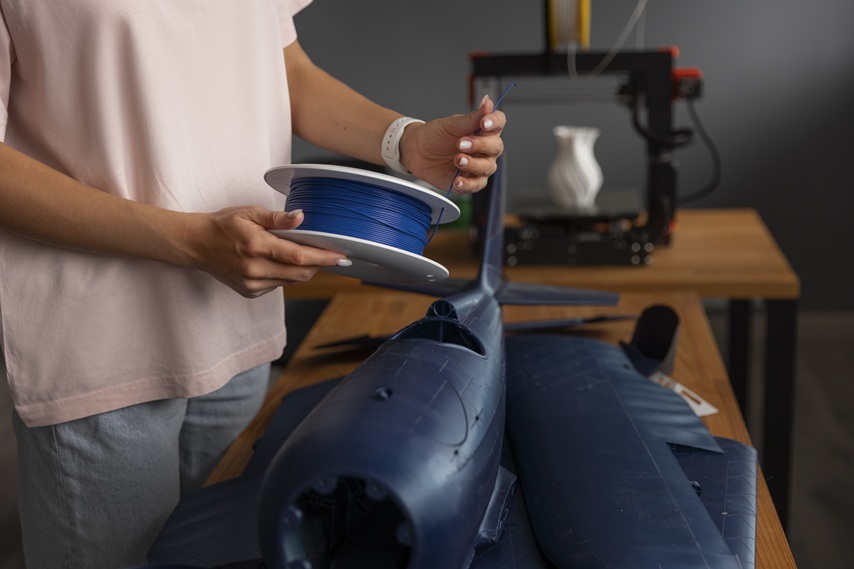
This rubber-like material is highly flexible while still offering impressive strength, abrasion resistance and protection against chemicals and weather. That makes it useful for everything from protective covers and seals to sports equipment, grips and shock-absorbing components. The trade-off is that TPU can be trickier to print than rigid materials and usually requires slower printing speeds for good results. Still, when flexibility and durability are priorities, TPU is hard to beat.
ABS
ABS is a popular choice when you need a printed part that can handle more heat, impact, and everyday wear than PLA. It offers good strength and resilience while remaining relatively affordable, and its surface can also be smoothed after printing for a cleaner finish. That makes it useful for practical items such as appliance housings, automotive components, fittings, and prototypes. The downside is that ABS can warp during printing, so a heated build plate and enclosed printer are often recommended. It can also release unpleasant fumes, so good ventilation is important.