
Every carpenter knows solid timber is a heavy, dense material. Because of that, wooden coffee tables need the right foundation to support the tabletop. One option furniture makers consider is steel coffee table legs. Although wooden supports that match the tabletop finish are also an option, steel is the sturdier, more minimalistic alternative. When shopping for steel coffee table legs for your next project, you’ll find different styles, colours and heights to choose from.
Styles
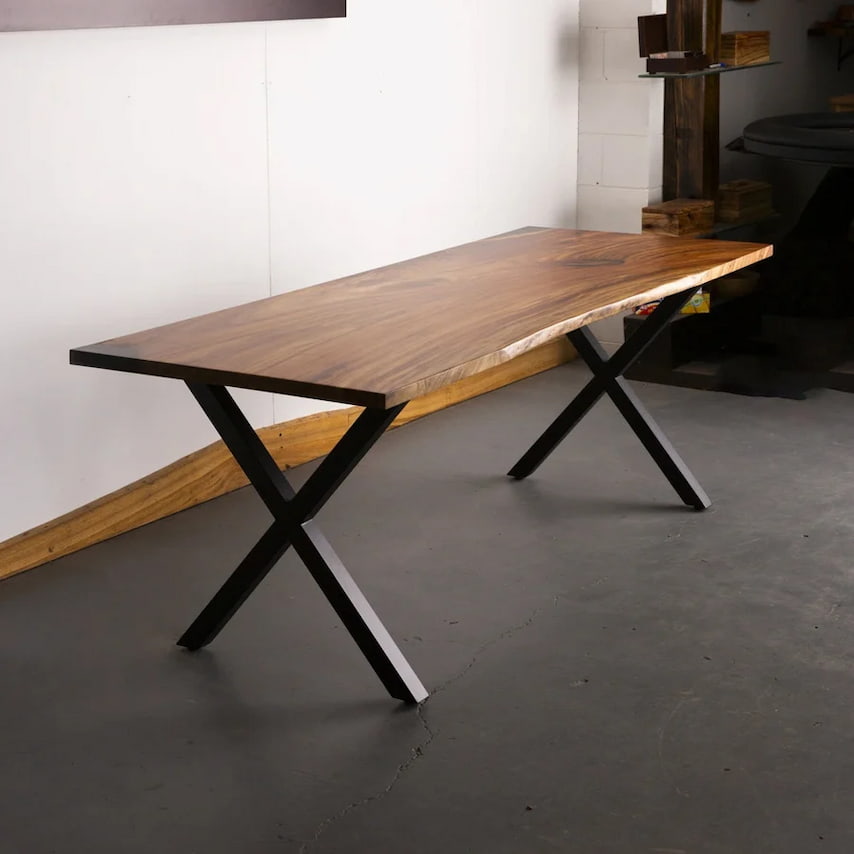
Cross-style legs form an “X” letter. They’re a simple way to give the table a strong base without adding too much visual weight. They suit industrial, contemporary and rustic designs, depending on the finish you choose.
U-shaped legs keep the overall table design simple and open. Usually paired together, they provide support at each end of the tabletop. This style suits minimalist coffee tables and allows more of the tabletop to remain visible. They also leave plenty of legroom on the sides, giving people more space to stretch their legs when sitting around the table.
Hairpin supports have a lighter and minimal look. They’re usually made from thin metal rods bent into a distinct “U” or “V” shape. You can use this leg style when you want to give a thicker timber top a less bulky appearance, or when working with smaller, rustic and live-edge coffee tables. Black hairpin legs also work well with industrial-style designs.
Trapezoid legs are another popular type of support. Shaped like a four-sided trapezoid, they feature a wide top section that attaches to the table and a narrower bottom section that rests on the floor. This style can work well with substantial timber tops where you want the legs to balance the surface. Their angled shape also adds a little more visual interest than straight legs without making the table look overly detailed.
Colours
Black steel is a popular option for industrial-looking coffee tables. It creates a strong contrast against natural timber and pairs easily with darker stains, raw wood and deeper finishes. A black frame can also keep the design looking simple while letting the grain and colour of the tabletop stand out.
On the other hand, white steel creates a lighter, cleaner look. You can pair white steel legs with pale timber, whitewashed finishes and Scandinavian-inspired coffee tables. The contrast is softer than black, which can help the overall piece feel less visually heavy.
Raw or unfinished steel gives the table a more rugged character. Its natural variation and slightly industrial appearance can complement reclaimed or rough-sawn timber. This option suits projects where the material itself is part of the design rather than something you want to hide beneath a polished finish.
Powder-coated finishes also give carpenters room to experiment with colour. Beyond black and white, you can choose shades that complement the timber or introduce a stronger contrast. You can consider this option when making a coffee table with a particular interior style or colour palette in mind.
Heights
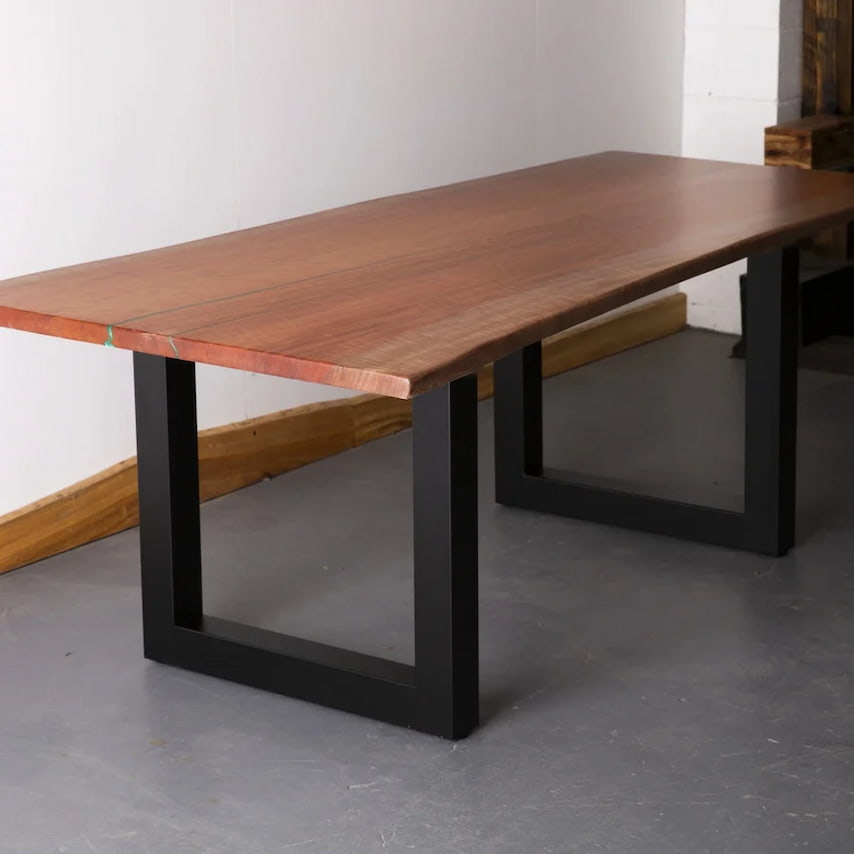
Standard coffee table height usually works well when you want the finished table to sit comfortably alongside a sofa. The exact height will depend on the thickness of the tabletop and the height of the seating it will sit beside, so measure the complete table rather than choosing legs in isolation.
A lower profile can give furniture a relaxed and grounded appearance. Consider shorter legs when you want the finished piece to work well with low-profile sofas and lounge settings. Keep the tabletop proportions in mind so the finished piece doesn’t look too squat.
Taller legs suit coffee tables that need a little more clearance underneath. They can also make a substantial timber top look lighter by giving it more visual space from the floor. Before choosing taller legs, check how the finished height will work with the surrounding seating.
Adjustable-height legs give you more flexibility when the final dimensions aren’t fixed. They can also help compensate for uneven floors or fine-tune the finished height once the tabletop is fitted. For custom furniture projects, that extra control can make the final installation easier.
Mounting Methods
How steel table legs attach to the tabletop is another detail worth considering. Different leg designs use different mounting methods, so check how they’re secured before choosing a set for your project. Mounting plates are a common option for individual steel legs. The flat plate sits against the underside of the tabletop and is secured with screws.
Screw-on legs attach directly to the underside of the tabletop. They work well for simple leg designs and smaller coffee tables, where you want a clean connection without adding extra brackets or hardware.
Steel frames offer another option. U-shaped, X-shaped and other frame-style legs can come as one piece, with fixing points along the frame that attach to the underside of the timber top.
For heavier timber tops, pay attention to the number and position of mounting points. The size of the tabletop, its weight and the leg configuration can all affect how much support the finished table needs. You’ll also want to check that the supplied screws or fixings are compatible with the thickness of your timber top.