
Some home design features have come a long way. Take kitchen backsplashes, for instance. Once considered purely utilitarian, today they’re seen as part of the kitchen décor. Although backsplashes still protect walls from cooking splashes, they can also add to the aesthetic. The same thing goes for the materials, colours and finishes available. There are plenty of ways to adorn and protect this area, from mosaic tiles to glass panels.
Mosaic Tiles
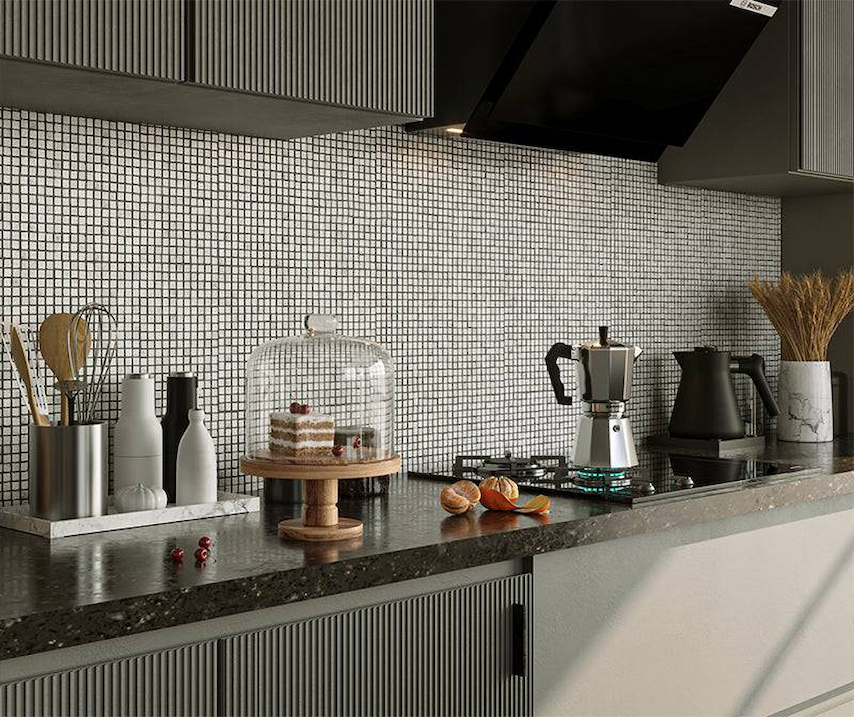
Mosaic tiles are a good choice if you want to add visual texture and detail to your kitchen walls. They’re made up of smaller pieces arranged in patterns, which gives you plenty of room to play with different colours, shapes and finishes. You can find these intriguing kitchen wall tiles in different materials like glass, ceramic, and stone.
Glass tiles are usually glossy because of the smooth, reflective nature of glass. They reflect light and can make the cooking zone feel brighter and more open. Natural stone mosaic tiles have natural variations and can give wall space between your counters and cabinets a natural look.
Design-wise, you can cover the entire backsplash area with these kitchen wall tiles, but you don’t have to. Another option is to use them as a decorative strip running along the middle of the backsplash, surrounded by larger, simpler tiles.
Next, you can arrange them in geometric patterns, create a border along the top or bottom, or combine different colours to form a repeating design. If you prefer a more subtle look, use mosaics in a single shade and let their varied shapes and textures add interest without introducing too many colours.
One thing to keep in mind with mosaic tiles is that they have more grout lines than larger tiles. This means there’s more surface to clean. Sealing may also be necessary, depending on the material you choose.
Marble, travertine, slate, and limestone are porous. That means they easily absorb water, oils, and stains and therefore should be sealed before or after installation. It’s always best to consult with a tiling specialist who can recommend suitable grout and sealants for your chosen mosaic tiles and explain how to care for them.
Classic Rectangular Tiles
Rectangular tiles are simple, versatile, relatively easy to wipe clean and easy to work into different decorating styles. Often called subway tiles, they’re usually laid horizontally in a staggered pattern, with each row offset from the one above it.
Colour-wise, white, grey, beige, sage green and navy are popular picks. The grout colour can also change the overall look. Matching the grout to the tiles creates a more seamless finish. On the other hand, a contrasting shade makes the pattern stand out.
Glass Panels
If you prefer a smooth and uninterrupted finish for the backsplash area, go for glass panels. Unlike tiled surfaces, they don’t have grout lines breaking up the area. This gives the cooking zone a clean, streamlined appearance and makes everyday cleaning a little easier. A quick wipe with a suitable glass cleaner is usually enough to remove cooking splashes and fingerprints.
Glass also gives you plenty of room to experiment with colour. You can choose clear glass to let the wall behind it show through or opt for a coloured panel to complement your cabinets and benchtops. White and neutral shades are popular for a simple, understated look, while greens, blues and darker tones can add a little more colour to the room.
Another advantage of glass panels is their reflective nature. This can help a smaller kitchen feel brighter, especially when the backsplash sits opposite a window or under good task lighting.
Most kitchen glass backsplashes are made from toughened safety glass that can withstand the heat and demands of everyday kitchen use. However, it’s important to check that the panel is suitable for its intended location. Measurements also need to be accurate, as glass panels are usually made to size and can be difficult to modify once installed.
Exposed Brick
Exposed brick offers something a little different, bringing texture, warmth and a more relaxed feel to the room. Brick backsplashes have natural variations in colour and texture, which makes them a good match for rustic, farmhouse and industrial-style kitchens.
Although traditional red bricks are a classic choice, you’re not limited to their natural colour. Whitewashed or painted brick can give the kitchen a lighter appearance while keeping some of the original texture. You can also find thin brick veneers, which recreate the look of traditional brick without taking up as much space as full-sized bricks.
Exposed brick kitchen walls work well alongside timber cabinets, open shelving, metal fixtures and natural stone benchtops. These materials complement its uneven surface and give the kitchen a more lived-in feel.
There is one practical consideration, though. Bricks are porous, so they can absorb grease, moisture and food splashes. So, they might not be ideal for a surface directly behind a cooktop or sink. If you want to use brick as a backsplash, make sure it’s properly sealed with a suitable protective coating. You’ll also need to check that the finish can withstand the conditions in that part of the kitchen.